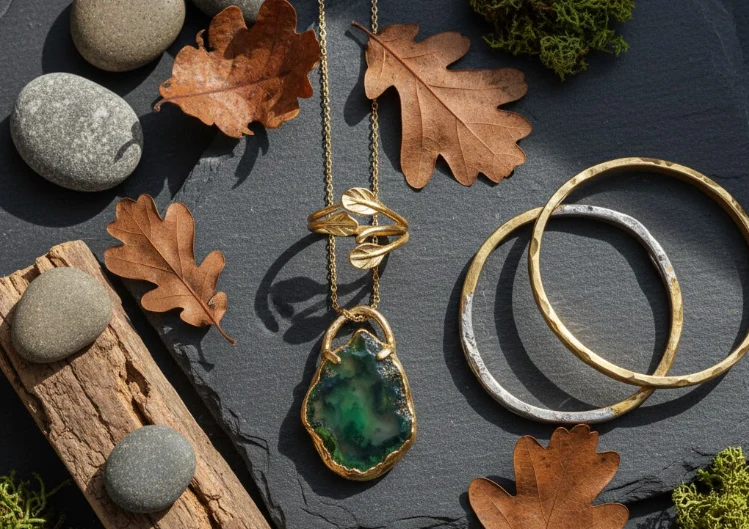

Throughout history, human adornment has drawn directly from the natural world. From ancient shells strung on cord to Art Nouveau floral motifs, artisans have always looked to flora, fauna, and earth formations for aesthetic guidance. In the modern era, however, nature-inspired jewelry has evolved far beyond literal depictions of flower petals and leaves.
Today, organic jewelry represents a sophisticated design philosophy that celebrates asymmetrical geometry, raw earth textures, untamed gemstones, and fluid biomimicry. As mass production saturates the market with sterile, machine-perfect accessories, consumers increasingly gravitate toward pieces that evoke raw wilderness, earthly serenity, and natural vitality. Exploring the core trends in nature-inspired fine jewelry reveals how modern artisans are translating the organic world into timeless wearable art.
Botanical Silhouettes and Fluid Biomimicry
Botanical motifs have undergone a major structural modernization. Rather than reproducing rigid, symmetrical floral patterns, contemporary jewelers are capturing the motion, growth cycles, and deliberate imperfections found in living plants.
Key expressions of modern botanical design include:
-
Branch and twig bands: Ring shanks and bracelet cuffs cast directly from real woodland twigs retain authentic bark ridges, growth nodes, and natural curvatures, giving fine gold a sculptural, tactile quality.
-
Asymmetrical leaf and vine climbers: Ear climbers and lariat necklaces trace the organic, creeping paths of climbing ivy or unfolding fiddlehead ferns, curving gracefully around facial contours without mirroring both sides identically.
-
Petal draping in metalwork: Designers manipulate molten precious metals into whisper-thin, curled sheets that mimic the delicate, unfurling petals of wild poppies and orchids, capturing the illusion of wind-blown movement.
-
Seedpod and bud textures: Incorporating forms like eucalyptus pods, poppy capsules, and lotus seed receptacles adds three-dimensional volume and architectural substance to pendant centers.
By embracing natural asymmetry, botanical jewelry creates an intuitive connection between the wearer and the vitality of plant life.
Raw, Uncut Gemstones and Mineral Slices
A central pillar of the organic design movement is the celebration of gemstones in their unrefined, geological states. For generations, traditional gem cutting prioritized removing inclusions and polishing away external host rock to achieve artificial visual symmetry. Modern jewelers are rejecting this approach in favor of showcasing the raw character of the earth.
Popular raw and geological gemstone styles include:
-
Rough-cut and uncut diamonds: Natural diamond octahedrons, macle crystals, and sliced diamond crystals preserve their natural frosted skins and unique mineral inclusions, offering an earthy alternative to standard brilliant cuts.
-
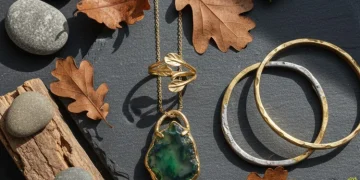
Geode and agate druzy settings: Pendants and cocktail rings featuring hollow geode cavities lined with sparkling micro-crystalline quartz expose the volcanic origins of the stone.
-
Mineral slices and trapiche gems: Cross-sections of tourmaline, emerald, and sapphire that display natural zoning, growth rings, and geometric spokes are polished into flat tablets, letting natural internal patterns take center stage.
-
Salt and pepper diamonds: Diamonds heavily characterized by visible graphite and mineral inclusions are intentionally featured, celebrating imperfections that resemble starry night skies or granite formations.
These stones ensure that every piece is distinct, as no two raw crystals can ever share the same internal matrix or rough geometry.
Oceanic Textures and Marine Inspirations
The fluid dynamics and biological wonders of the marine environment provide endless inspiration for organic jewelry collections. Rather than traditional maritime iconography like anchors or cartoonish starfish, modern marine jewelry captures the textures, currents, and marine ecosystems of deep waters.
Standout marine design elements include:
-
Coral-inspired cast metals: Ring mountings and hoop earrings cast with porous, perforated surfaces echo the calcified skeletal structures of sea fans and reef formations.
-
Rippled and tide-worn metal finishes: Gold and silver bands featuring hammered, undulating surfaces reflect the gentle motion of ocean waves and the parallel ridges left in sand by retreating tides.
-
Sea glass and pebble cabochons: Stones cut into smooth, asymmetrical tumbled shapes resemble river stones and sea glass smoothed by centuries of surf and water friction.
-
Raw keshi and baroque pearls: Non-nucleated keshi pearls and organically sculpted baroque pearls, created without human intervention to enforce symmetry, evoke the wild, untamed nature of marine oyster beds.
These aquatic references give jewelry a fluid, soothing presence that evokes the rhythmic beauty of water.
Molten Metalwork and Earthly Textures
Advances in lost-wax casting and hand-forging techniques have allowed metalworkers to highlight the liquid state of precious metals. The resulting pieces resemble volcanic magma, molten lava flows, or ancient weathered rock faces.
Prominent metallurgical textures in organic design include:
-
Melted and poured silhouettes: Signet rings, chunky pendants, and hoop earrings with dripping, uneven rims look as though liquid gold cooled and solidified spontaneously.
-
Reticulation and heat texturing: Jewellers apply direct flame to metal alloys to create randomized ridges, ripples, and craters that mimic dried riverbeds, lava plains, or eroded canyons.
-
Chiseled and stone-hammered bands: Using custom chasing tools, metalsmiths chisel deep, angular facets into precious metals, creating matte surfaces that catch light like broken bedrock.
-
Sand-cast and volcanic grain: Casting gold in specialized clay or volcanic sand imparts a porous, fine-grained micro-texture that gives new pieces the weathered aesthetic of archaeological artifacts.
Highlighting the physical properties of precious metals transforms each item from a simple accessory into a miniature sculptural landscape.
Ethical Sourcing and Sustainable Craftsmanship
The aesthetic appreciation for nature has naturally aligned the organic jewelry movement with sustainable, responsible sourcing practices. Modern consumers who value organic beauty expect the materials to be harvested without devastating the environments that inspire them.
Key sustainable practices driving the market include:
-
Recycled precious metals: Re-refining existing gold, platinum, and silver from post-consumer sources minimizes reliance on destructive open-pit mining operations.
-
Artisanal and fair-trade gemstone mining: Independent designers increasingly partner with small-scale, artisanal mining cooperatives that adhere to fair-wage practices, community investment, and land restoration protocols.
-
Low-impact studio practices: Metalsmiths are replacing toxic acid pickling solutions and chemical solvents with non-toxic, plant-derived alternatives, reducing hazardous studio waste.
-
Traceable origin documentation: Providing verifiable provenance for every gem and metal alloy ensures that the natural piece supports ecological conservation and ethical labor.
This commitment to environmental stewardship ensures that nature-inspired jewelry honors both the beauty and the preservation of our planet.
Frequently Asked Questions
Are raw and rough-cut gemstones durable enough for everyday rings?
Raw gemstones can be worn daily if the mineral itself possesses sufficient hardness and the setting provides adequate structural protection. Stones with a Mohs hardness rating of seven or higher, such as rough diamonds, raw sapphires, and unpolished rubies, resist scratching during normal wear. However, raw stones with exposed mineral fissures or softer hardness, like raw opals or fluorite, are better suited for low-impact jewelry like pendants or earrings rather than daily rings.
How do I clean organic jewelry that features delicate bark or molten crevices?
Because organic jewelry contains deep surface grooves, cast bark ridges, and unpolished textures, dirt and skin oils can collect in the recesses. The safest way to clean these pieces is using warm water, mild fragrance-free liquid dish soap, and an extra-soft baby toothbrush. Avoid ultrasonic cleaning machines if your piece features raw, included gemstones, baroque pearls, or porous minerals, as sound vibrations can expand internal fissures.
Why are asymmetrical nature-inspired earrings sold as pairs if they do not match exactly?
Asymmetrical earrings are intentionally designed to complement each other in scale, weight, and visual theme while avoiding carbon-copy symmetry, reflecting how paired elements in nature, such as two leaves on a single stem, are harmoniously balanced yet individually unique. This deliberate mismatch creates artistic interest and frames the face with organic balance.
Can an organic wedding band with irregular textured surfaces be resized in the future?
Resizing an organically textured or twig-cast ring is possible, but it requires the skills of an experienced bench jeweler. When expanding or reducing the band, the jeweler must cut the metal, adjust the size, and then hand-carve or reticulate the seam area to match the surrounding natural pattern seamlessly. Continuous eternity patterns with all-around stones, however, are significantly more difficult to alter.
What is the difference between casting real botanicals and hand-fabricating organic designs?
Direct organic casting involves taking a real twig, seedpod, or leaf, encasing it in investment plaster, and burning the organic material away in a kiln before injecting molten metal into the resulting cavity, capturing the botanical texture down to the cellular level. Hand-fabrication, on the other hand, involves a metalsmith using saws, hammers, chasing tools, and torches to sculpt and texture raw sheet metal into organic shapes from scratch.
Do textured and reticulated metal finishes smooth out or wear down over time?
High-contact areas on deeply textured rings will naturally soften and burnish over years of daily friction against other hard surfaces. This gradual wearing is considered part of the piece evolving beauty, adding a soft, historic patina that enhances the organic character of the metal. If desired, a metalsmith can easily reapply sandblasting, chisel detailing, or wire-brush finishes during routine maintenance.